
How Artificial Intelligence Revolutionizes the Manufacturing Sector
why
AI in the Manufacturing Industry
In the era of Industry 4.0, companies are adopting innovative solutions to optimize production processes. Mastranet AI, our company specializing in the development of software based on Artificial Intelligence (AI) and Machine Learning (ML), is driving this revolution in the manufacturing industry. Predictive maintenance, a type of preventive maintenance that is performed following the identification of measured parameters processed through mathematical models to determine the remaining time before failure, is in fact transforming the manufacturing sector precisely because it is powered by AI.
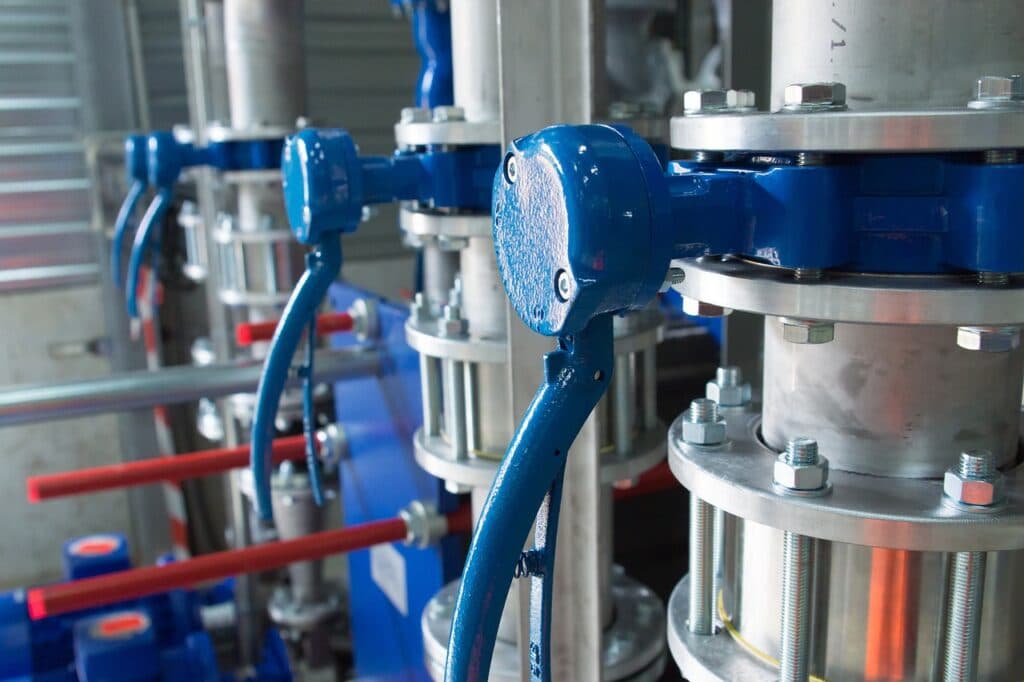
The Transformation of Industry 4.0
Industry 4.0 has introduced a new era of automation and connectivity. Companies are progressively adopting advanced technologies, such as Artificial Intelligence, to improve efficiency and productivity. Mastranet AI positions itself at the center of this transformation, as it is able to offer cutting-edge software solutions that leverage the potential of AI.
The Importance of Predictive Maintenance
Predictive maintenance has proven to be of fundamental importance for manufacturing companies trying to minimize downtime and optimize resources. Through the use of Artificial Intelligence, it is possible to develop advanced solutions capable of predicting failures and planning maintenance interventions predictively, consequently reducing operational costs and increasing the lifespan of equipment.
AI-based predictive maintenance is changing the face of the manufacturing industry, and Mastranet AI, with its experience in the sector, actively contributes to this innovation, providing tailored solutions for companies seeking to maintain a competitive advantage in a world increasingly oriented towards Industry 4.0.

The Benefits of Predictive Maintenance
Predictive maintenance is an innovative approach that offers a series of fundamental advantages, capable of significantly improving business operations:
- Operational Reliability: Predictive maintenance reduces downtime, improving operational reliability and ensuring production continuity. It is capable of identifying potential failures before they can compromise operations, thus enabling targeted and effective interventions.
- Optimized Efficiency: Through advanced data analysis, predictive maintenance identifies and resolves problems before they become critical. This allows optimizing equipment efficiency, thereby reducing unplanned downtime and lowering overall operational costs.
- Strategic Planning: The ability to predict failures enables strategic maintenance planning. By reducing unplanned interventions, companies are able to improve resource management, optimize scheduled maintenance, and extend the useful life of equipment.
Conclusions
Integrating predictive maintenance into business processes not only increases operational efficiency but also contributes to creating a safer and more reliable work environment, enabling companies to keep pace with the challenges of Industry 4.0.
Our company, as explained in this article, offers innovative solutions based on the use of Artificial Intelligence, which can be found on our LinkedIn page, along with the latest updates on Industry 4.0.
Learn more by clicking here.